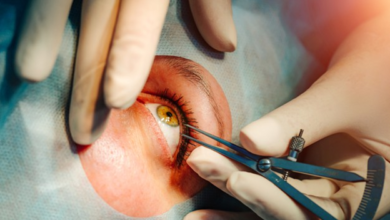
Follicular Unit Extraction (FUE) has revolutionized the world of hair regrowth. The procedure that used to require large cut-outs and visible wounds has transformed into a minimally invasive and extremely exact surgical technique. In the midst of this change is an unassuming but crucial instrument called the micro-punch FUE.
The extent to which a surgeon can achieve an excellent graft survival rate or has difficulty with transection and low yield typically depends on the kind of punch that is being utilized. Punches that are sharp, blunt punches and hybrid designs for punches each have their own part in the modern FUE procedure. Understanding the differences between them is not only a technical debate, but it’s also an important decision that can affect the outcome of the patient and surgical speed, as well as long-term consequences.
As a reputable seller of high-quality surgical instruments, Peak Surgicals provides the latest FUE micro-punches designed for accuracy, safety and reliability. This comprehensive guide explains sharp, blunt, and sharp punches from a practical and a surgical standpoint to help professionals select the appropriate tool for the best outcomes.
Understanding the Role of Micro-Punches in FUE Surgery
For FUE hair transplantation, the micro-punch serves as the main tool used for extraction. Its purpose is to mark the skin surrounding the follicular unit, which allows the hair graft to be removed without causing any trauma. Although this might sound simple, biology and complexity in hair follicles create the selection of a punch.
Hair follicles may not be completely straight. They curve underneath the skin and change in angle, depth, and even thickness. The punch has to navigate the complexity without causing damage or breaking the hair follicle. Just a fraction of millimeters in diameter or edge sharpness could decide if a graft is successful or is unable to survive.
Modern micro-punches vary in size, ranging from 0.6 millimeters to 1.0 millimeters, and have designs that are adapted to various skin types, hair types and surgical preferences. Peak Surgicals manufactures punches with high-quality medical steel that guarantees durability, consistency of sharpness, and a smooth interaction with the tissue.
The right choice of punch not just about personal preference. It’s about matching the punch to the body of the patient as well as the surgical technique.
Sharp FUE Punches: Speed, Precision, and Risk
What Are Sharp Punches?
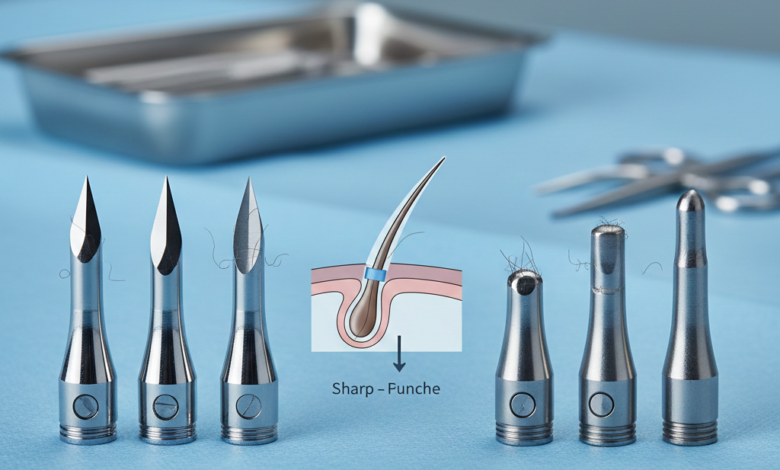
Sharp FUE punches are equipped with an extremely sharp cutting edge that can cut perfectly through the epidermis as well as the dermis. They require only very little downward pressure, which allows surgeons to cut skin easily and effectively.
Advantages of Sharp Punches
Sharp punches are frequently admired because of their speed and accuracy. Some of the benefits include:
- Faster penetration, with less resistance
- Hand fatigue can be reduced when performing long procedures.
- Clean margins for incisions to encourage healing
- Excellent performance on both hard and the scalp that is fibrotic.
Surgeons who work with thick donor sites or skin that is thick typically prefer sharp punches due to their efficiency. Sharp punches from Peak Surgical have ultra-fine edges that keep their sharpness even after many uses, which ensures the same level of performance throughout surgery.
Risks and Limitations
While they are beneficial, they also carry the risk of transsection. Because the cutting edge cuts through tissues with a lot of force and can cut through the hair follicle, the angle or the depth is incorrectly calculated.
Follicles that have been damaged can cause:
- Lower rates of survival for grafts
- Reduction in density in the recipient region
- Hair of donors who have been discarded
This risk is more pronounced when patients have curly or angled hair follicles. Because of this, powerful punches are the best for surgeons who are experienced and have good control and feedback from the visual.
Blunt FUE Punches: Safety, Control, and Graft Protection
What Are Blunt Punches?
Blunt punks are characterized by a less sharp edge that doesn’t cut into tissue with a sharp edge. Instead, they utilize controlled pressure to break the follicle from its surrounding tissues by pushing away instead of cutting.
Advantages of Blunt Punches
Blunt punches are well-known for their security features. The benefits of these punches include:
- Reduction in the risk of follicle transection
- Increased the graft’s integrity
- Perfect for fragile or curly hair. Ideal for fragile or curly
- Greater forgiveness for minor angle variations
Many surgeons believe that blunt punches are vital when dealing with patients with hair that is textured in the Afro style or hair follicles with a high curvature. The blunt punches of Peak Surgical are made with smooth internal lumens that prevent compression of the graft and allow for easy extraction.
Challenges using Blunt Punches
The most significant drawback of blunt punches is the greater force needed to penetrate. This can result in:
- Surgeon fatigue
- The procedure is now longer
- A risk of scalp trauma if extreme pressure is applied
Blunt punches can also be less effective on extremely hard or damaged scalps. Because of this, they are frequently utilized in conjunction with sharp or mixed techniques.
Hybrid FUE Punches: The Best of Both Worlds
What Are Hybrid Punches?
Hybrid punches reflect the development in FUE instrumentation. The designs like trumpets, serrated punches or flared edge punches blend blunt and sharp elements into one tool.
How Hybrid Punches Work
Hybrid punches usually include:
- A sharp edge on the outside to cut the skin
- A flared or blunt inner edge that protects the hair follicle
- Specialized geometries that help guide the follicle securely into the lumen
This lets surgeons cut with efficiency while minimizing the risk of transection.
Benefits of Hybrid Punches
Hybrid punches are unbeatable in their range of applications:
- High precision and enhanced the safety of grafting
- A shorter learning curve for new surgeons
- The ability to adapt across various hair types
- Improved extraction consistency
Peak Surgicals specializes in modern hybrid punch designs, made using micron-level precision to guarantee consistent and reliable results.
Comparative Analysis: Sharp vs. Blunt vs. Hybrid Punches
FeatureSharp PunchBlunt PunchHybrid Punch
Cutting Speed High Low Moderate
Transaction Risk: Higher , Very Low, Minimal
Pressure Required Low High Balanced
Ideal Hair Types: Straight, Thick. The curly, fragile. All kinds
Surgeon Skill Required : High , Moderate , Low to Moderate
This comparison illustrates why a lot of clinics are now using hybrid punches as their primary tool for extraction.
Why Punch Quality Matters in FUE Surgery
Many different types of punches aren’t equal. Punches made poorly can result in tears, graft injury, and produce inconsistent results. The precision of machining, the quality of the material and edge consistency are essential.
Peak Surgicals makes use of:
- Medical-grade stainless steel
- Laser-precision cutting technology
- Rigorous quality control testing
Every punch will deliver the best performance, whether it’s sharp or blunt, or even hybrid.
Choosing the Right FUE Punch for Your Practice
The choice of the correct punch is based on a variety of factors:
- Patient hair characteristics
- Condition of the Scalp
- Surgeon experience
- Extraction technique (manual vs. motorized)
A lot of experienced surgeons have multiple punch types in their arsenal and alter their methods according to individual situations. Peak Surgicals offers customizable punch solutions that let clinics create a complete set of instruments.
Future Trends in FUE Punch Design
The pace of innovation of FUE technology is continuing to increase. New trends are emerging, including:
- Nano-coated punch surface for less friction
- Punches with adjustable depth
- Artificially assisted motorized extraction systems
- Improved serration patterns to aid in Follicle guidance
As a company that thinks ahead, Peak Surgicals stays ahead of the latest trends by constantly developing its product line to meet the changing demands of hair restoration specialists.
Conclusion: Precision begins with the Perfect Punch
In FUE surgery, the success begins with extraction. Punches that are sharp offer speed and efficiency, while blunt punches focus on security, and hybrid punches provide the right balance to meet the demands of modern surgery. Knowing the differences between them allows surgeons to make informed choices that protect grafts as well as improve the outcomes.
With top-quality equipment from Peak Surgicals, clinics can increase FUE treatments, minimize complications and produce regular, natural-looking outcomes. The correct punch isn’t only a tool, it’s the basis of a successful hair restoration.
Frequently Asked Questions (FAQs)
1. Which punch from FUE is the most suitable for those who are just starting?
Hybrid punches are a great choice for those who are just beginning, since they combine cutting efficiency and graft security and reduce the risk of transsection.
2. Can sharp punches damage hair follicles?
Yes, sharp blows pose a greater risk of transection when not accompanied by precision degree and depth controls.
3. Are blunt blows slower to utilize?
Blunt punches typically require more pressure and take longer, but provide better graft protection.
4. What is it that makes Peak Surgicals FUE punches different?
Peak Surgicals punches have been made using medical-grade steel, precise engineering and strict quality control to ensure consistent performance.
5. Should clinics be using more than one kind of punch?
Absolutely. Utilizing blunt, sharp and hybrid punches is a great way for surgeons to be flexible to various situations and patients.